When painters quote an exterior, they're looking at more than square footage. The material your home is covered in changes how much prep is needed, how much paint the surface absorbs, and whether the job is done by brush, roller or sprayer. That's why two houses of the same size can have very different exterior painting prices.
The national picture
Angi estimates the average cost to paint a house exterior at about $3,177, with a typical range of $600 to $7,700, or roughly $1.50 to $4 per square foot of paintable surface. HomeAdvisor's painting cost guide lists exterior siding projects at about $1,800 to $4,200.
Height is a major factor. Angi estimates costs rise roughly 50% with each added story:
| Home height | Typical exterior painting cost |
|---|---|
| One story | $1,500 – $3,500 |
| Two stories | $3,000 – $6,200 |
| Three stories | $4,500 – $10,000+ |
Source: Angi
Cost by siding type
Siding changes the cost per square foot. One 2026 cost guide estimates these ranges for painting a typical 2,000 sq ft two-story home:
| Siding type | Estimated cost (2,000 sq ft, two story) |
|---|---|
| Vinyl | $3,800 – $6,500 |
| Aluminum | $4,000 – $7,000 |
| Fiber cement | $4,200 – $7,200 |
| Wood | $4,500 – $8,000 |
| Stucco | $5,500 – $10,500 |
| Brick | $5,800 – $11,000 |
These are estimates, not quotes. Your local labor costs, your home's condition and how much trim you have will move the number. Here's why each material lands where it does.
Wood siding
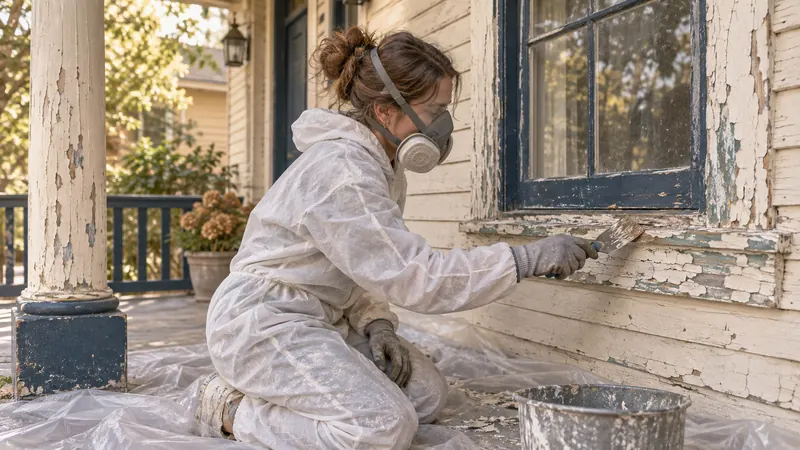
Wood is the classic painted siding, and it's also the most prep-sensitive. Wood expands, contracts and absorbs moisture, so older paint tends to crack and peel. A good job usually means washing, scraping loose paint, sanding, replacing rotted boards and spot-priming bare wood. Well-maintained wood with sound paint is relatively straightforward; neglected wood with lots of peeling can take far longer.
Vinyl siding
Vinyl is often among the cheaper siding types to paint because it needs less scraping and sanding. The catch is color. Dark colors absorb heat, and vinyl can warp if painted a shade darker than it was designed for. Painters typically use paints formulated for vinyl and limit how dark you can go. Cleaning is essential, since chalky residue keeps paint from sticking.
Aluminum siding
Aluminum siding often has a chalky, oxidized surface that must be washed thoroughly and sometimes primed with a bonding primer. Dents and scratches don't disappear under paint. Prices tend to fall in the low-to-middle range.
Fiber cement
Fiber cement siding, often sold under brand names like HardiePlank, holds paint well and is fairly predictable to paint. It's usually primed or factory-finished, so prep focuses on cleaning and caulking. Costs are moderate.
Stucco
Stucco is porous and textured, so it soaks up more paint and takes more effort to cover evenly. Hairline cracks are common and need to be filled or treated with elastomeric products. Many painters spray and back-roll stucco to work paint into the texture. More material and more labor push stucco toward the higher end.
Brick
Painting brick is often the most expensive option. Brick is very porous, may need cleaning and repointing before painting, and requires masonry primer and breathable paint. It's also a big decision: once brick is painted, it's difficult and costly to return it to bare brick, and painted brick needs repainting over time.
Other factors that change exterior pricing
Condition and prep
Peeling, chalking, mildew and rot all add prep time. Our guide to prep work explains what thorough exterior prep includes and why skipping it shortens how long paint lasts.
Trim, doors and details
Fascia, soffits, window trim, shutters, doors, porches and railings are slower to paint than flat siding. A house with lots of detail will cost more than a simple box of the same size.
Access and height
Steep slopes, landscaping close to the house, and tall gables can require extra ladders, staging or lifts. In Denver, for example, Angi notes height surcharges of roughly 60% above 13 feet, 90% above 17 feet and 120% above 19 feet for the portions of a home at those heights.
Location
Exterior prices vary a lot by city. Angi's averages range from about $1,774 in St. Louis to $5,285 in Boston. See how location affects painting prices.
Home age
Homes built before 1978 may have lead-based paint on the exterior. Scraping and sanding it requires lead-safe work practices. Our guide to lead paint and older homes explains what that involves.
How to compare exterior quotes
When comparing exterior quotes, make sure each one spells out:
- Which surfaces are included: siding, trim, soffits, fascia, doors, shutters, porch, deck
- Prep steps: washing, scraping, sanding, caulking, priming bare wood, wood repair
- Paint product and number of coats
- How the paint will be applied (spray, brush, roll, or spray and back-roll)
- Protection of landscaping, windows and walkways
- Warranty terms
Our quote comparison checklist walks through this step by step.
For more on height, see one-story vs. two-story exterior painting, and how long exterior paint lasts on each type of siding.
Frequently asked questions
What siding is cheapest to paint?
Vinyl and aluminum siding are often among the least expensive to paint because they usually need less scraping and sanding. Fiber cement is also fairly predictable. Stucco and brick tend to cost the most because they absorb more paint and need specialized products.
Should I paint vinyl siding a darker color?
Be careful. Dark colors absorb more heat, which can warp vinyl. Many paint manufacturers offer vinyl-safe color collections designed to reduce that risk. Ask your painter which colors are safe for your siding.
How much does it cost to paint a two-story house exterior?
Angi estimates about $3,000 to $6,200 for a two-story home, though siding type, condition, trim and location can push it higher or lower.
Sources
- Angi: How Much Does It Cost to Paint a House Exterior?
- Angi: Exterior Painting Cost in Denver
- HomeAdvisor: Painting Costs
- CostToRenovate: Exterior Painting Cost 2026
- The Spruce: How Much Does It Cost to Paint a House Exterior?
Prices in this article are national ranges from the sources listed and are meant for planning. Your actual price depends on your home, your local market and the contractor you choose.