Painting is one of the most popular DIY home projects, and for good reason. It's approachable, and the savings can be real. But DIY isn't free, and it isn't always the best value. Here's an honest look at both sides.
What you save with DIY
The biggest cost in professional painting is labor. Angi estimates labor at 60% to 90% of the total. When you do the work yourself, you keep that money, minus the cost of materials and tools.
For reference, Angi puts the average cost to have a room professionally painted at about $1,100, with a typical range of $400 to $1,600. A DIY room may cost a fraction of that in materials.
What DIY actually costs
DIY materials add up more than most people expect:
| Item | Notes |
|---|---|
| Paint | Angi lists $20 to $70 per gallon; a gallon covers about 300 to 400 sq ft. Contractors often pay less than retail. |
| Primer | About $10 to $20 per gallon, needed for patches, stains and color changes |
| Brushes and rollers | Quality tools make a visible difference |
| Roller frames, trays and extension poles | |
| Drop cloths, plastic and painter's tape | |
| Patching compound, sandpaper and caulk | For prep |
| Ladder | A step ladder for most rooms; taller ladders for high spaces |
Source for paint and primer prices: Angi
The first project costs the most because you're buying tools. Later projects get cheaper.
The cost of your time
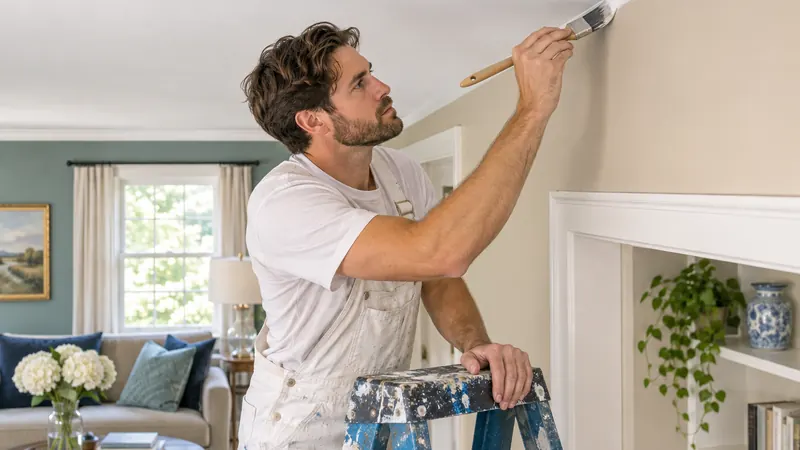
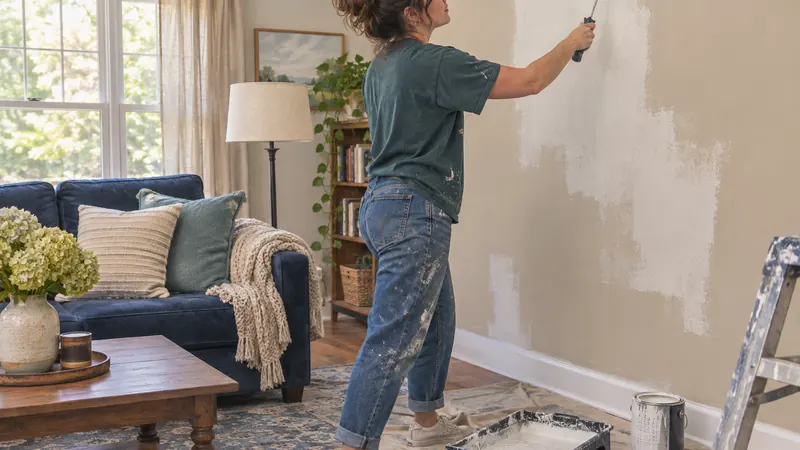
A professional crew can often paint a standard room in a day. A first-time DIYer may spend a full weekend on the same room, including prep, two coats, drying time and cleanup. For a whole house, that can stretch into weeks of evenings and weekends.
Whether that's worth it depends on how much you value your time, and whether you enjoy the work.
Quality differences
Professionals have advantages that are hard to match on a first try:
- Clean cut lines along ceilings and trim without tape
- Even coverage without lap marks or roller lines
- Proper prep, which is what makes paint last. See our guide to prep work.
- Product knowledge: the right primer, sheen and paint for each surface
- Efficiency, which matters most on large or complex jobs
DIY results can be very good, especially on simple rooms with patience and good tools. The gap shows most on trim, doors, cabinets and anything with a glossy finish.
Safety
Ladders are a real risk. The U.S. Consumer Product Safety Commission estimates about 273,000 emergency department-treated injuries involving ladders and stools in 2024. Painting high walls, stairwells and exteriors means a lot of ladder time.
In homes built before 1978, scraping and sanding can release lead dust. The EPA's lead-safe rules apply to paid contractors, but the EPA encourages homeowners to follow lead-safe practices too. See our guide to older homes.
When DIY makes sense
- Small, simple rooms with standard ceilings
- Same or similar color repaints
- Walls in good condition with minimal repairs
- You have time and enjoy the work
- Budget is the top priority
When hiring a pro makes sense
- High ceilings, foyers and stairwells. See our guide to high ceilings.
- Exteriors, especially two-story homes
- Cabinets, where finish quality and durability matter
- Big color changes and lots of trim
- Older homes where lead paint may be present
- Homes you're preparing to sell, where a flawless look matters. See our guide to painting before selling.
- When your time is limited
The hybrid approach
Many homeowners split the work. You might paint a couple of simple bedrooms yourself and hire a professional for the stairwell, exterior or cabinets. Or you can handle the easy prep, like moving furniture and removing outlet covers, and let the painter do the rest. Our tips for lowering your painting bill cover ways to reduce a pro's hours.
Frequently asked questions
Is it cheaper to paint a room yourself?
Usually, yes, because you avoid labor, which Angi estimates at 60% to 90% of a professional job. You'll still pay for paint, primer, tools and supplies, and the first project costs the most.
How long does it take to paint a room yourself?
For a first-time DIYer, a standard bedroom often takes a full day or a weekend, including prep, two coats, drying and cleanup.
What painting jobs should I not DIY?
High ceilings, stairwells, exteriors above one story, cabinets and older homes with possible lead paint are the jobs most worth hiring out.
Sources
- Angi: How Much Does It Cost to Paint a Room? (updated October 2026)
- U.S. Consumer Product Safety Commission: 2024 Annual Death and Injury Report
- U.S. EPA: RRP Program for Do-It-Yourselfers
Prices in this article are national ranges from the sources listed and are meant for planning. Your actual price depends on your home, your local market and the contractor you choose.