When painters quote an interior, the walls are usually the starting point. Then come the extras: baseboards, door and window casings, crown molding, doors and ceilings. These surfaces are small compared with the walls, but they take a surprising amount of time.
How much they add
Cost guides commonly estimate that adding trim and ceilings to a walls-only job increases the price by about 20% to 40%. Angi offers more specific numbers:
| Surface | Typical cost (Angi) |
|---|---|
| Trim and baseboards | About $1 to $3 per linear foot, up to $6 for detailed work |
| Ceilings | About $1 to $6 per square foot |
| Walls only vs. full room | Painting just the walls can cut the cost roughly in half |
Source: Angi
That last point is worth noting: when walls, ceilings, trim and doors are all included, the non-wall surfaces can make up a large share of the job.
Why detail work takes so long
Trim and baseboards
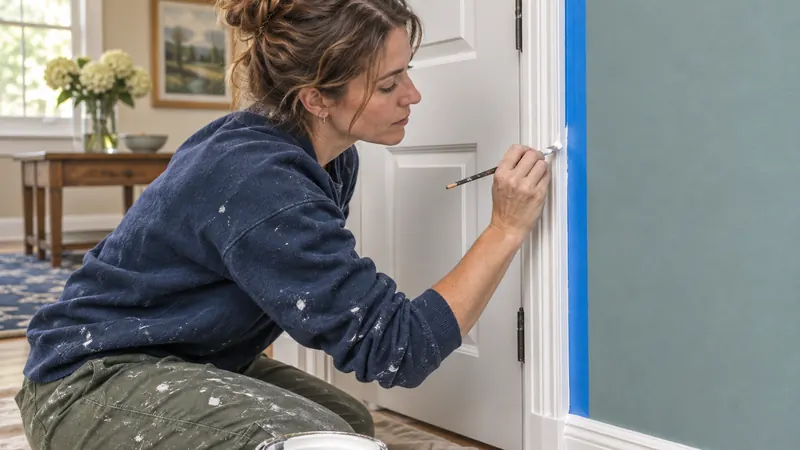
Trim is painted mostly by brush. It often needs to be cleaned, lightly sanded so new paint sticks, caulked where it meets the wall, and then painted in a durable, glossier finish that shows every brush mark if it's rushed. Painters also have to cut a clean line where trim meets the wall, often on both edges.
Doors
Each door has two faces, edges and often panels. Hardware is removed or masked, the door is sanded, and enamel is applied carefully to avoid drips. Paneled doors take longer than flat ones. Door frames and casings add more trim.
Windows
Window casings, sills, sashes and muntins are some of the slowest surfaces to paint. Many quotes price windows separately.
Ceilings
Ceilings are large, flat surfaces, but painting overhead is slow and tiring, and drips are a risk. The ceiling line where wall meets ceiling needs careful cutting in. Textured or popcorn ceilings absorb more paint and are harder to roll. Tall or vaulted ceilings add ladder time; see our guide to high ceilings and stairwells.
When to include them
Include trim and doors when
- They're scuffed, chipped or yellowed
- You're changing the wall color and want a crisp, fresh contrast
- You're preparing a home to sell and want everything to look new
- The current trim color clashes with the new wall color
Include ceilings when
- They have water stains, smoke stains or visible patches
- They look dingy next to freshly painted walls
- You're changing the wall color a lot and the ceiling color no longer works
Leave them out when
- They're in good condition and the color still works
- Budget is tight and the walls are the priority
- You plan to replace trim or doors soon
Angi notes that painting just the walls can cut the cost roughly in half, so this is one of the most effective ways to control a budget. See our tips for lowering your painting bill for more.
How trim and ceilings show up on quotes
These surfaces are some of the most common sources of confusion when comparing quotes. One painter includes them; another doesn't; a third includes baseboards but not door casings. Always confirm:
- Are baseboards, door casings, window casings and crown molding included?
- Are doors included? Both sides? Closet doors?
- Are ceilings included in every room or only some?
- What sheen will be used on trim and doors?
Our quote comparison checklist can help you line these up.
A note on condition and age
Older trim may have many layers of paint, oil-based paint underneath, or lead paint in homes built before 1978. Oil-based trim needs proper sanding and a bonding primer before latex paint will stick. Lead paint requires lead-safe work practices. See our guide to older homes.
Frequently asked questions
How much does it cost to paint trim?
Angi estimates about $1 to $3 per linear foot for trim and baseboards, and up to about $6 per linear foot for detailed work like crown molding.
Is it cheaper to paint trim and walls at the same time?
Usually, yes. Painters can share setup, protection and cleanup, and coordinate cutting in. Painting trim separately later means another round of setup.
Should ceilings be painted every time walls are painted?
Not necessarily. If ceilings are clean and the color still works, they can often go many years between repaints.
Sources
- Angi: How Much Does It Cost to Paint a Room? (updated October 2026)
- BuilderMuse: Interior Painting Cost
Prices in this article are national ranges from the sources listed and are meant for planning. Your actual price depends on your home, your local market and the contractor you choose.