New kitchen cabinets are one of the most expensive parts of a kitchen remodel. If your cabinets are structurally sound but look dated, painting them is one of the most cost-effective ways to change how your kitchen looks. But it isn't the right choice for every kitchen.
Here's how painting, refacing and replacing compare.
The three options at a glance
| Option | What it involves | Typical cost range |
|---|---|---|
| Painting | Cleaning, sanding, priming and painting existing boxes, doors and drawers | About $2,000 – $6,500 (professional) |
| Refacing | New veneer on cabinet boxes, plus new doors, drawer fronts and hardware | About $4,000 – $9,500 |
| Replacing | Removing old cabinets and installing new ones | About $4,500 – $15,000+ |
Ranges are drawn from HomeGuide data cited by Lily Ann Cabinets for painting and replacing, and from a Massachusetts cabinet painting guide for refacing. Actual costs depend heavily on kitchen size, cabinet quality and location.
Cabinet painting costs
The Spruce estimates professional cabinet painting at roughly $3 to $10 per square foot or $30 to $60 per linear foot of cabinetry. A cabinet company's comparison puts professional spray finishing at about $3,000 to $9,000 for larger or more detailed kitchens.
What drives the price:
- Number of doors and drawers. Each one is removed, prepped, painted on both sides and reinstalled.
- Condition. Grease, damage and peeling finishes take longer to fix.
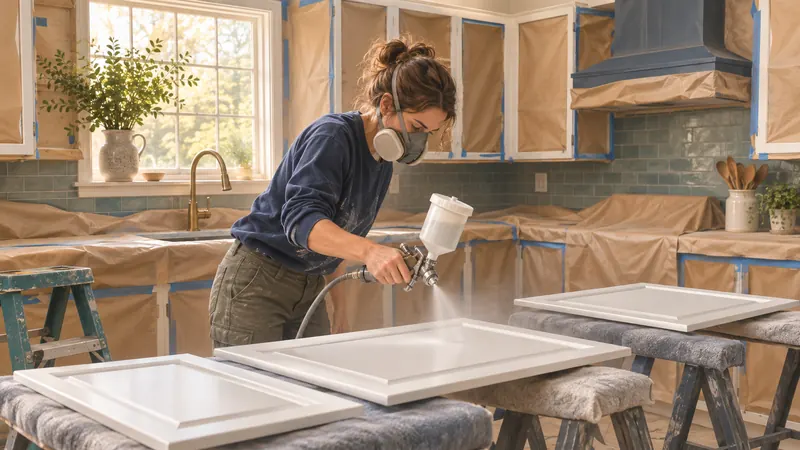
- Finish method. Sprayed finishes, often done in a shop or controlled area, usually cost more than brushing and rolling but give a smoother, factory-like look.
- Product. Durable cabinet-grade enamels and primers cost more than wall paint.
- Extras. Painting the cabinet interiors, adding crown molding, or installing new hardware adds cost.
Benjamin Moore's contractor guide gives an example of the gap: a cabinet refinishing job around $3,500 compared with roughly $24,000 to replace the cabinets in the same kitchen.
Refacing costs
Refacing keeps your existing cabinet boxes but covers them with a new veneer and replaces the doors and drawer fronts. It's a good middle ground when you want a different door style, like going from raised panels to flat Shaker doors, which paint alone can't do. It's typically more expensive than painting but less disruptive than a full tear-out.
Replacement costs
Replacing cabinets means removing the old ones and installing new boxes, doors and hardware. It's the most expensive option, and it often triggers other costs: new countertops, backsplash repairs, plumbing and electrical adjustments, and flooring patches where old cabinets sat. HomeGuide data puts typical replacement at about $4,500 to $15,000, and high-end custom cabinetry can go well beyond that.
When painting is the right choice
Painting usually makes the most sense when:
- The cabinet boxes are solid wood or quality plywood and in good shape
- You're happy with the layout and storage
- The doors are a style you still like, or will like in a new color
- You want a big visual change on a moderate budget
- You're preparing to sell and want an affordable update
When refacing or replacing is better
Consider refacing or replacing when:
- The boxes are damaged, warped, water-stained or falling apart
- The cabinets are made of thermofoil or laminate that doesn't hold paint well
- You want a different layout, more storage or new appliances that don't fit
- You want a different door style
- You're already doing a full kitchen remodel
Why cabinet painting quotes vary so much
Cabinets take a lot more prep and precision than walls. A proper job usually includes removing doors and hardware, labeling everything, degreasing, sanding, filling grain or dings, priming with a bonding primer, and applying multiple thin coats of a durable enamel, with drying time between each.
A cheap cabinet painting job often skips degreasing, sanding or primer. It may look fine at first, then chip, peel or stay tacky. That's one reason the lowest quote can end up being the most expensive. Our articles on prep work and lowball quote red flags explain what to look for.
Questions to ask a cabinet painter
- Will the doors and drawers be removed and painted off-site or in a separate area?
- What cleaning, sanding and primer steps are included?
- What paint product will you use, and is it designed for cabinets?
- Will you spray, brush or roll?
- Are cabinet interiors included?
- How long will the kitchen be out of use?
- What warranty do you offer against peeling or chipping?
For the rest of the kitchen, see the cost to paint a room, and ask about cabinet coverage when you review a painting warranty.
Frequently asked questions
How long does painted cabinetry last?
A well-prepped, professionally painted cabinet finish can last many years with normal care. Durability depends heavily on prep, primer and the type of enamel used. High-touch areas near the sink and trash may need touch-ups over time.
Can you paint laminate or thermofoil cabinets?
Laminate can sometimes be painted with special bonding primers, but results vary. Thermofoil often peels and is generally a poor candidate for paint. A painter can tell you whether your cabinets are suitable.
Does painting cabinets add value to a home?
Fresh, neutral cabinets can make a kitchen look updated in listing photos and showings, which can help a home sell. It's usually far cheaper than replacing cabinets for a similar visual change.
Sources
- The Spruce: Cost to Paint Kitchen Cabinets
- TC Wholesale Cabinetry: Cost to Paint vs. Replace Cabinets
- Benjamin Moore: Cabinet Refinishing Guide for Contractors
- Mass Home Comfort: Cabinet Painting Cost in Massachusetts
- Lily Ann Cabinets: Cost to Paint Kitchen Cabinets
Prices in this article are national ranges from the sources listed and are meant for planning. Your actual price depends on your home, your local market and the contractor you choose.